Accessible and Aging-in-Place Bathrooms: ADA-Inspired Design, Curbless Showers, and Safer Upgrades
From curbless showers to comfort-height toilets and properly placed grab bars, an accessibility-focused bathroom remodel can support independence at every age.
A bathroom can be beautiful and still be difficult to use. Slippery floors, a tall tub wall, cramped clearances, and poorly placed hardware turn everyday routines into risky moments—especially as mobility changes over time. The goal of an accessible, barrier-free bathroom is simple: make the room easier to move through, safer when wet, and comfortable for both standing and seated use.
In this guide, we’ll walk through ADA-inspired (not “institutional”) design principles for residential bathrooms, the real construction details behind curbless showers, how to choose between a walk-in tub and a shower, and the upgrades that create meaningful safety—like grab bars for bathroom use, better lighting, and a non-slip bathroom floor.
Quick clarity: “ADA” vs. “aging-in-place”
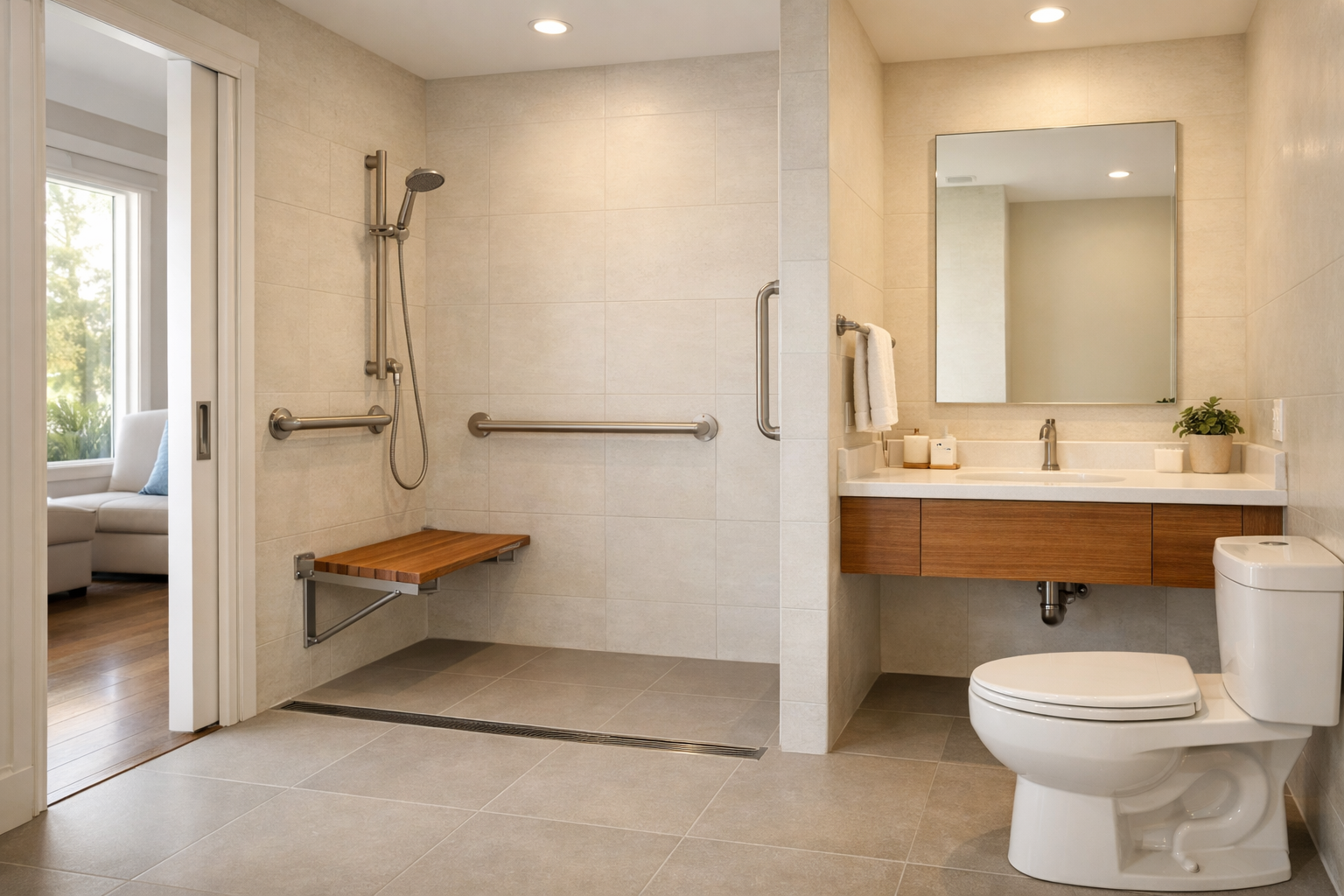
Most homes aren’t required to follow ADA code the way public buildings are. But ADA measurements are a practical reference for clearances, reach ranges, and safe transitions. When we say “ADA-inspired,” we mean applying the usability lessons—without making your bathroom feel clinical.
What Makes a Bathroom Accessible and Barrier-Free?
An accessible bathroom is designed around two realities:
- Bathrooms get wet. Traction, drainage, and stable support matter.
- Mobility can change. A layout that works today should still work if you need a cane, walker, or shower chair later.
A true barrier-free bathroom reduces fall risks and removes common obstacles by prioritizing step-free entry, stable surfaces, and easy-to-reach controls. It also focuses on clear floor space for turning, wider pathways, and fixtures placed where they can be used comfortably while standing or seated.
The “accessibility wins” that improve daily life for everyone
- Step-free shower entry (curbless or very low threshold) instead of stepping over a tub wall or tall curb.
- Stable support where you naturally need it (grab bars, benches, properly anchored hardware).
- Slip resistance on floors and in shower pans—paired with smart water containment so the room stays drier.
- Better lighting and intuitive switches so you’re not navigating shadows at night.
- Ergonomic heights for toilets, vanities, and storage to reduce strain and awkward reaching.
Design mindset shift: Accessibility isn’t a single product (like “add grab bars”). It’s a system—layout, surfaces, water control, and hardware working together to reduce the number of “risky moments” in a wet room.
ADA-inspired planning you can actually use at home
Even if you aren’t building to strict ADA specs, the guidelines are useful as a checklist for comfort. Here are homeowner-friendly principles to discuss with your remodeler:
Aging-in-place bathroom design checklist (high-impact items)
- Pathways: Can you walk in without turning sideways or bumping knees on a vanity?
- Turning space: Is there a clear area to pivot safely (especially if a walker or chair is used later)?
- Shower controls: Can you reach the valve and handheld wand without stepping fully into the spray?
- Transfer-friendly toilet area: Is there room to approach, sit, and stand without twisting?
- Support: Are the “grab points” structural (anchored into blocking), not just decorative bars?
- Water containment: Does the shower design minimize splash onto the main floor?
- Traction: Are the floor and shower surfaces chosen for wet slip resistance?
If you’re also weighing how accessibility fits into a broader remodel (layout changes, plumbing moves, scope), you may find it helpful to review a full planning framework like this Bathroom Remodel Checklist Guide.
Curbless and Wheelchair-Accessible Showers (Roll-In or Low-Threshold)
A curbless shower is often the cornerstone of an accessible bathroom because it eliminates one of the biggest hazards: stepping over a curb or tub wall. It also creates a clean, modern look—one reason so many homeowners choose curbless designs even before they “need” them.
For a wheelchair-accessible shower (or simply a shower that can accommodate a chair later), the key is to combine adequate clear space with reachable controls, a stable seat option, and a floor system that drains correctly every single day.
Roll-in vs. low-threshold: what’s the difference?
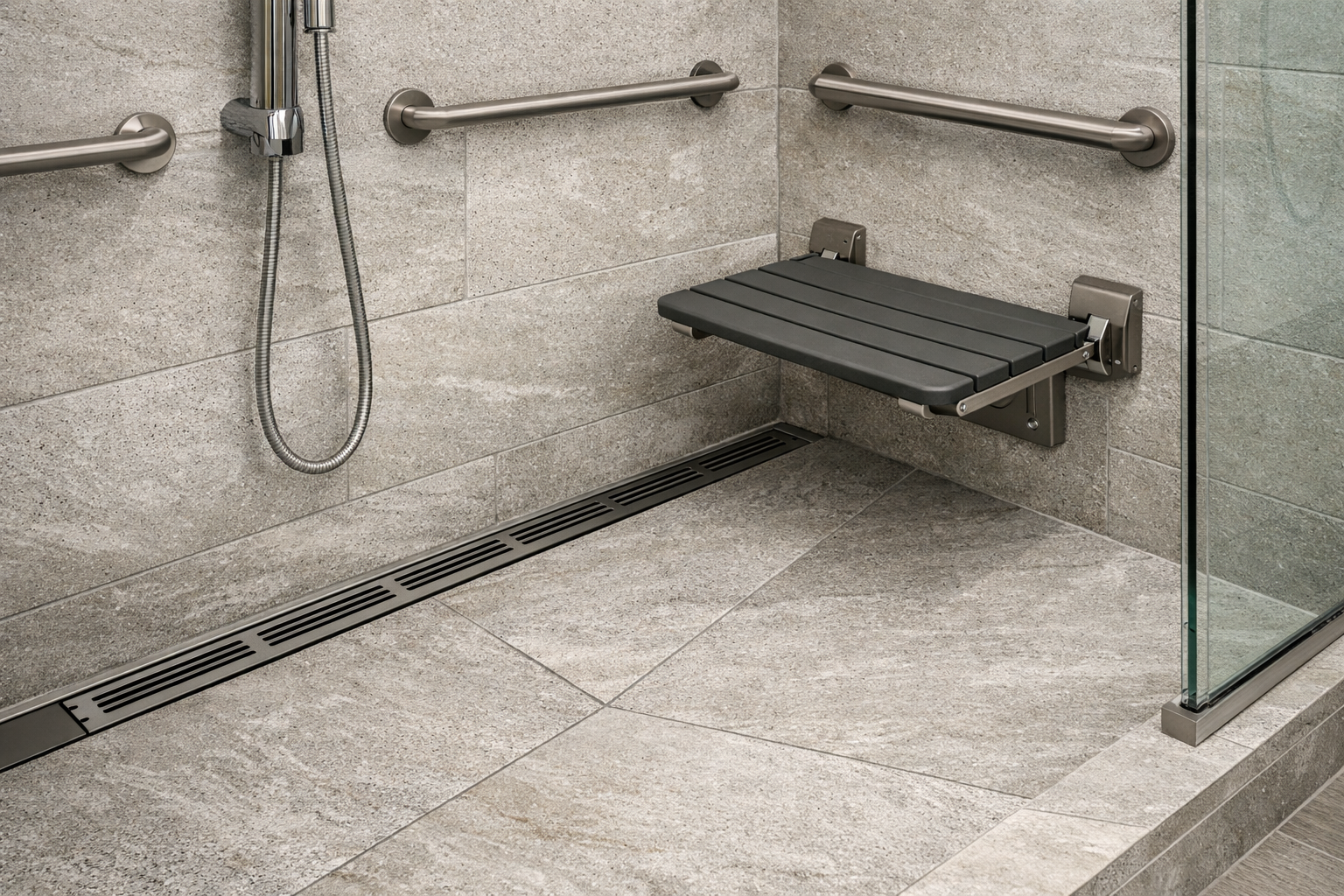
- Roll-in shower: Designed for a wheelchair to enter without a lip; typically larger, with clear maneuvering space. Often paired with a linear drain and thoughtful splash control.
- Low-threshold shower: Has a very small lip (sometimes 1–2 inches) that reduces water escape while still being much easier than a traditional curb.
Both options can be excellent aging-in-place choices. The “right” one depends on your layout, who uses the bathroom, and how much you want to prioritize wheelchair entry versus water containment.
The construction details that make curbless showers succeed
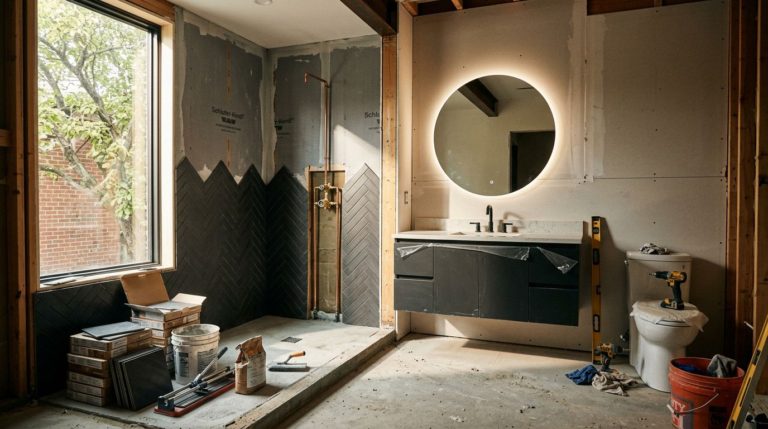
Curbless showers aren’t just “remove the curb and tile it.” The performance comes down to slope, waterproofing continuity, and drainage. When done well, the shower floor slopes subtly toward the drain and the surrounding bathroom floor stays dry during normal use.
Why linear drains are common in curbless showers: A linear drain placed at the shower opening or along the back wall can simplify slope geometry and help handle water flow—especially with large-format tile. It’s not mandatory, but it’s a frequent choice in barrier-free designs.
If you want to go deeper on shower floor systems, pans, and failure points, this breakdown on shower pan replacement costs and what drives them is a useful companion read.
Accessible shower features worth prioritizing
- Handheld shower on a slide bar so it works seated or standing.
- Controls placed for “dry reach” so you can turn on water without stepping fully into the spray.
- Bench seating (built-in or fold-down) for fatigue reduction and safer bathing.
- Grab bars integrated with your layout—at entry, along the long wall, and at seating locations.
- Slip-resistant tile (and grout joints that improve traction).
Takeaway: “Barrier-free” should still feel luxurious
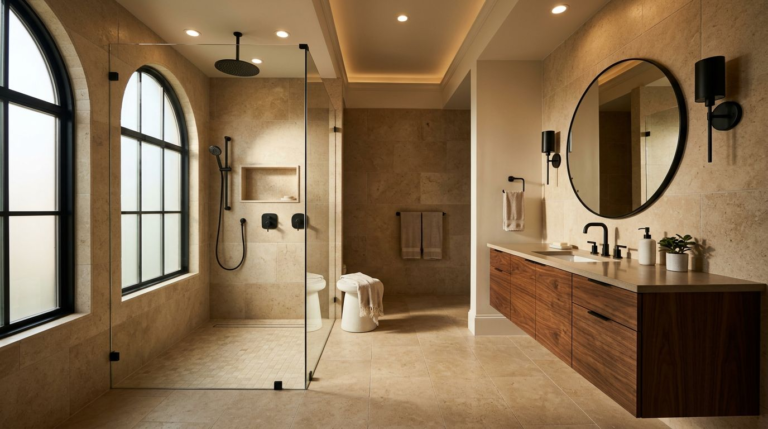
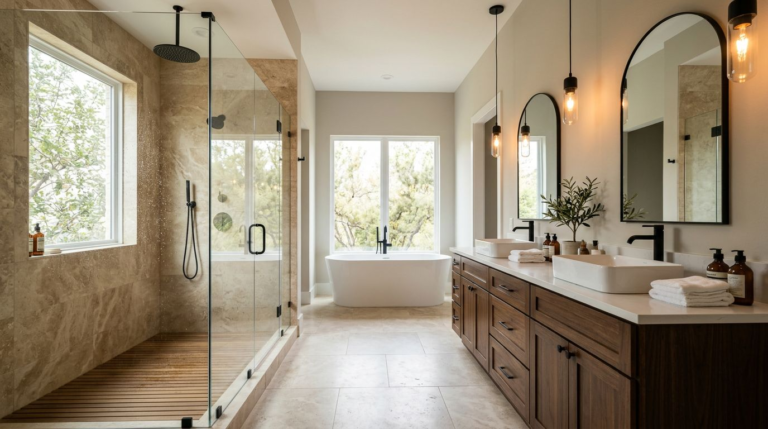
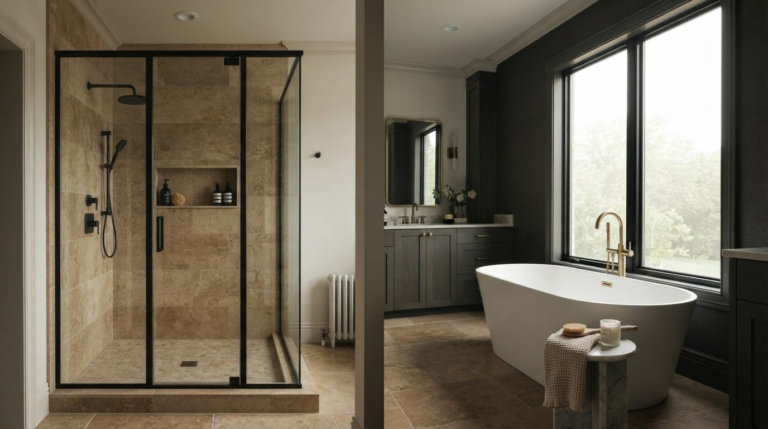
Curbless showers can look high-end and minimal while being safer. Coordinated finishes, well-chosen tile, and intentional glass layouts prevent an “afterthought” look—while the hidden work (slope + waterproofing) ensures it performs.
For more design inspiration and how modern layouts support access, see How a Modern Shower Design Improves Bathroom Accessibility and The Main Types of Accessible Showers.
Walk-In Tubs vs. Showers: Choosing the Right Bathing Option
One of the most common questions in an aging in place bathroom remodel is whether a walk-in tub is “better” than a shower. The most accurate answer is: it depends on your bathing habits, mobility needs, and how you want the bathroom to function day-to-day.
When a walk-in tub shines
A walk-in tub can be a great solution for people who strongly prefer soaking and need a door for easier entry. It can reduce the need to step over a tub wall, and many models offer hydrotherapy options.
However, there are real usability considerations:
- You typically enter, sit, and wait while the tub fills.
- After bathing, you’ll wait again while it drains before opening the door.
- Some users find the “waiting while wet” piece uncomfortable unless the bathroom is warm and the process is well planned.
Why curbless showers are often the most flexible choice
A curbless shower is often the most adaptable aging-in-place option because it supports:
- Standing showers with secure traction and support.
- Seated showering with a bench or shower chair.
- Caregiver assistance with fewer obstacles and more space to move.
- Mobility aids (now or later) with less need for a full bathroom redesign.
Practical rule: If you want the bathroom to work across the widest range of future needs, start with a well-designed shower. If soaking is central to quality of life, evaluate a walk-in tub—but plan the room so daily routines remain efficient.
A hybrid approach many homeowners choose
Many remodels prioritize a primary curbless shower for daily use and consider a walk-in tub only if soaking is a must-have. If you’re converting an existing tub space, a tub-to-shower conversion may also unlock significant space and ease of use. Related: Flower Mound tub-to-shower conversions that add comfort and value and tub to shower conversions in Flower Mound and Lewisville.
Decision snapshot
- Choose a curbless/accessible shower if you want maximum flexibility, easier cleaning, and strong future-proofing.
- Choose a walk-in tub if soaking is non-negotiable and you’re comfortable with the fill/drain waiting cycle.
- Consider caregiver needs: space, access to controls, and safe transfer points can matter as much as the bathing fixture itself.
Grab Bars, Seating, and Smart Placement for Real Safety
Of all the safety upgrades available, grab bars for bathroom use are among the most effective—when they’re installed correctly and placed where people actually need support.
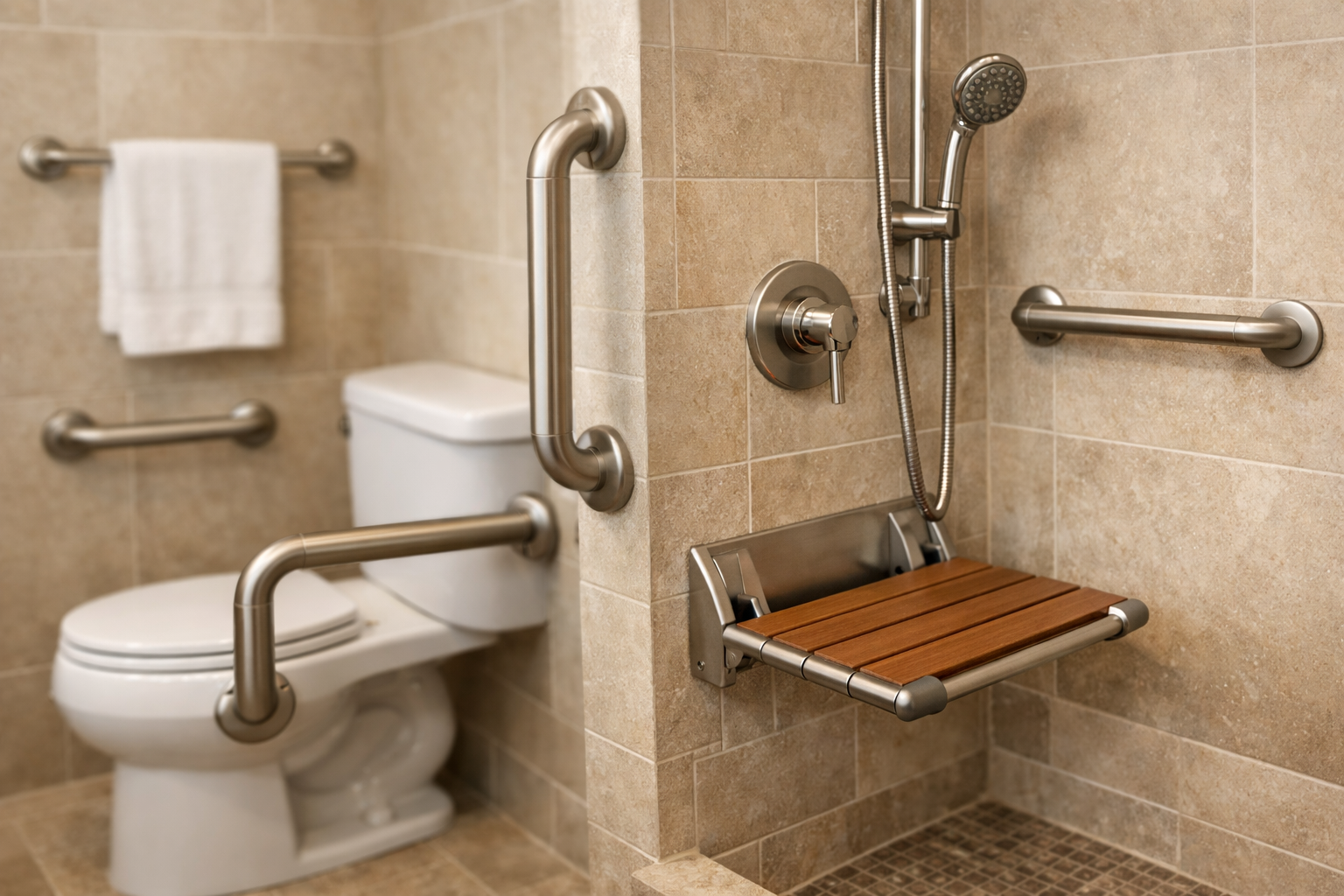
The most important detail isn’t the finish or the shape. It’s this: grab bars must be anchored into framing or reinforced blocking. A bar screwed into drywall alone can fail at the exact moment it’s needed most.
Where grab bars help most (and why placement matters)
Good placement is about natural movement—where your hand reaches during a transition. Consider these common zones:
- Shower entry: Support at the moment of stepping in/out (or transferring into a seated position).
- Long shower wall: A stable “travel” bar for balance while standing or moving toward a bench.
- Near the shower valve: So you can stabilize while adjusting temperature/flow.
- Toilet area: Bars can support sitting/standing and transfers; placement depends on room layout and user preference.
Seating: built-in bench vs. fold-down seat
A shower bench or fold-down seat reduces fatigue and fall risk—especially when paired with a handheld shower and slip-resistant flooring.
- Built-in bench: Feels seamless and often looks the most “custom.” It requires space and proper waterproofing detail.
- Fold-down seat: Great when space is tight. It provides seating only when needed and keeps the shower open otherwise.
Design tip: You can coordinate grab bars with towel bars, shower hardware, and cabinet pulls so the safety upgrades blend into the design. The result feels like an intentional, modern remodel—not a medical retrofit.
Common mistakes to avoid
- Installing too late: Blocking should be planned before tile goes up. Retrofitting can be more limited.
- Placing bars “by guess”: A bar that looks centered may be useless if it isn’t where a hand naturally reaches.
- Prioritizing aesthetics over function: Thin decorative rails aren’t always safe as load-bearing support.
Takeaway: The safest bar is the one you’ll use
People instinctively reach for support during transitions. Place grab bars where those transitions happen—entry, turning, sitting, standing—then match finishes so they feel like part of the room.
Comfort-Height Toilets, Vanity Clearances, and Everyday Ergonomics
Accessibility isn’t just about the shower. The “dry side” of the bathroom is where you can quietly remove strain from daily routines—often with small changes that create big comfort.
Comfort-height toilets: why they matter
A comfort height toilet can reduce knee and hip strain by making sitting down and standing up easier for many adults. It’s a simple upgrade, but it can meaningfully reduce the “effort cost” of everyday use.
When evaluating toilet comfort and safety, pay attention to:
- Height: “Comfort height” varies by brand; choose what feels stable for the primary users.
- Clear space: Extra room at the sides or front makes movement safer and supports mobility devices if needed.
- Support strategy: If you want bars near the toilet, plan their placement early so blocking and spacing are correct.
Vanity design and clearances (standing and seated usability)
Accessible bathroom design often includes adequate clear space around the sink to support safer movement and potential mobility devices. Even if you don’t need a seated vanity today, planning for it can future-proof the room.
Ergonomic improvements to consider:
- Lever-style faucets that don’t require strong grip or twisting.
- Anti-scald protection to reduce burn risk (especially important for children and older adults).
- Storage you can reach without deep bending—drawers, pull-outs, and frequently used items placed higher.
- Mirror and outlet placement that works for different heights.
Lighting and controls: underrated safety upgrades
Falls often happen in low light. Improving visibility is one of the most cost-effective safety moves you can make.
- Layered lighting: combine overhead, vanity, and shower-safe lighting to reduce shadows.
- Easy switches: place controls where you enter, and consider rocker or motion options.
- Night pathway: subtle night lighting helps for early mornings without glare.
Ergonomics principle: The best aging-in-place bathroom reduces the number of times you must bend, twist, or reach while balancing on a wet floor.
If you’re planning a full remodel, it’s helpful to understand how fixture decisions and plumbing moves affect scope and schedule. See how long a bathroom remodel takes in Denton, TX and this step-by-step bathroom remodel timeline.
Non-Slip Bathroom Floors and Moisture-Smart Materials
A non-slip bathroom floor is a foundational aging-in-place upgrade because slips are a leading cause of bathroom injuries. But “non-slip” is more than a label: it’s the combination of material texture, grout pattern, and how water is managed across the room.
Choosing safer flooring (without sacrificing style)
Look for surfaces that provide traction when wet and are easy to clean. Homeowner-friendly guidance:
- Textured porcelain tile is a common choice for durability and grip.
- Smaller-format tile can increase traction because additional grout lines act like micro “treads.”
- Matte finishes often perform better than high-gloss surfaces in wet conditions.
- Consistent transitions reduce toe-catching and trip edges.
Takeaway: traction + water control beats “grippy” alone
A floor can be textured and still be risky if water regularly escapes the shower. The safest bathrooms pair a traction-forward surface with smart drainage and splash control.
Moisture-smart wall materials and ventilation
Water-resistant wall systems, proper ventilation, and well-sealed transitions help prevent mold and protect the remodel long-term. Prioritize:
- Continuous waterproofing in wet zones (behind tile or wall panels).
- High-quality sealant and transitions at corners, niches, and changes of plane.
- Ventilation sized for the space and used consistently (timers help).
Small details that improve usability every day
- Shower niches placed at an accessible height so you’re not bending to the floor.
- Low-profile thresholds where needed—minimizing trips while still containing water.
- Easy-to-reach towel hooks so you aren’t dripping across the room.
If budget is part of your planning (it usually is), you may also want to read: what increases bathroom remodel cost the most and how to reduce bathroom remodeling costs.
Conclusion: Build a Bathroom That Still Works Years From Now
An accessible, aging-in-place bathroom doesn’t have to look clinical. In fact, many of the most modern remodel features are also the safest: curbless showers, simple hardware, open layouts, and clean surfaces.
When you prioritize barrier-free movement, stable support, and wet-area performance, you get a room that feels easier—today—and stays usable if needs change later. The highest-impact upgrades typically include:
- A curbless or low-threshold shower with proper slope, waterproofing, and drainage
- Professionally installed grab bars and a safe seating option
- A comfort height toilet and smarter clearances around fixtures
- A traction-forward non-slip bathroom floor plus better water containment
- Lighting, controls, and storage that reduce reaching, bending, and awkward movement
Ready to Build an Accessible, Aging-in-Place Bathroom?
JBN Bathroom Remodeling can help you plan a safer, more comfortable bathroom with curbless showers, grab bars, non-slip flooring, and ADA-inspired design details. Call today or request a free consultation.